To begin the story at the beginning, read "Part 1: Post 1: Beginning Again," published in January, 2013. To consult a description of the campus, read "Part 1: Post 14: The Greening of Campus," published in March, 2013.

Friday, October 11, 2013

Part 6: Post 7: Arthur


So I’ve been thinking about how the school year is ending and what I’m going to do over the winter break and all of that—but Arthur is graduating. No matter how strange the end of the year is for me, it must be so much more so for him, since it’s the only year he has here.

I don’t know Arthur very well. Maybe it’s because he’s so much older than I am that we haven’t hung out that much—we don’t have a whole lot in common. Then, too, he has a habit of holding court, collecting a group of people around him and going on and on about one of the many topics he’s supposedly an expert on. I don’t really have much patience for that, and I’m not personally convinced he is an expert. True, he co-led a coven for twenty years, but what does it mean to be an expert in a club you founded and a symbol system you made up? I suppose I might be being unkind. I don’t mean to be. He seems like basically a good guy, and I suppose it's difficult to adjust to not being in charge anymore after twenty years.

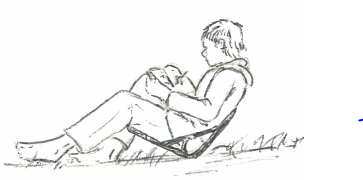
Anyway, one thing we do have in common is a master; Arthur tested out as basically qualified to graduate the day he enrolled, but he had to spend a year here and work with at least one master, so he chose to work with Charlie on nature writing. He’s spent the last seven months working on a series of creative non-fiction essays. When he’s not holding court, he’s usually sitting under a tree somewhere, observing and taking notes.

“I’m getting a bachelor’s degree in writing down exactly what I’m looking at,” he sometimes grumbles, as though that is ridiculous thing to do, but I have a feeling Charlie would accept that description as the literal truth. He tends not to have much patience for anything not rooted in exactly what a person is looking at. Greg calls it "favoring the via negativa." Charlie doesn’t usually talk about his other students in detail, but he did once say, of Arthur, “he needs to focus his brilliant mind on something other than his brilliant mind.”

But they seem to get along. They’re both stubborn old men, after all, so I’m sure they understand each other.

They are actually about the same age. Arthur is sixty-eight and Charlie is…well, I’m not sure. He once said he’s over three times my age, and he knows how old I am, so he must be over sixty. But, all joking aside, I wouldn’t call Charlie old. He sometimes calls himself old, but I don’t really believe it. He seems middle-aged to me. That’s all. I don’t think of old guys as shooting deer with bows I can’t even draw, for one thing. But Arthur, on the other hand, he’s old. He’s in great shape—he goes running three days a week, he does yoga, I have it on good authority that the straight women and gay guys on campus all think he’s cute, and yet, he’s old. I’m not sure what the distinction is.

“Charlie has only known young man’s losses,” Kit explained, once. I didn’t ask her what she knows of Charlie’s losses, but I know Arthur has lost his wife and his coven. I’m not sure what happened to his coven. I think it drifted apart while his wife was ill, or something like that. I’ve never had a wife (or a coven), but I think it must change a man inside, to lose one. He doesn't seem depressed or sad, but sometimes I see him, when he's alone and doesn't know I'm watching, turning and turning his wedding ring on his finger, like they prayer wheels the Buddhists sometimes use.

I remember that when Arthur arrived here he told Sharon that he didn’t want to be alone. I asked him the other day what he plans to do after he graduates. I mean, he only gets to be a student here for a year, so that's not a very long reprieve from alone-ness. Has something changed? Does he feel better now? Will he go somewhere else? Where? Where do old men with a new bachelor degree and no immediate family go? I don't mean how will he support himself--I understand he has a pretty good pension from somewhere or other, plus a good bit of savings. I'm just having a hard time imagining being him.

“I haven’t decided yet,” he told me. “I could stay here, be an ally or something, but eventually I’m probably going to want to start my candidacy, and I have to leave, to make that happen. To stay I have to go, it seems like.” He laughed a little, at the irony. He means that if he wants to keep studying here by becoming a candidate for mastery, he'll have to leave school first. To stay, he has to go. They require a three year period of complete separation from the school community between getting your degree and beginning your candidacy, I guess to keep this community from getting too insular and cult-like. Or, at least, most people need three years. They’ve cut it down to one year for Arthur, because he’s had so much experience outside the school before coming here. And, as he points out, as an old guy he might not have as long in which to wait. He laughs when he says that, too.

“They’ve got it backwards, anyway,” he told me once. “At your age, a year takes an eternity. At my age three years goes by faster than it used to take me to put on my socks in the morning. They should have you take a year and give me three years off.”

“You can take three years off if you want to,” I reminded him, but he waved the idea away with one hand.

“I’ll probably be back the week after they send me away, if I can,” he said.

But all of this makes it sound as though Arthur is already done. He doesn’t graduate until he’s completed his year and a day, on Brigit this coming spring. He doesn’t even have Charlie’s ok yet. He has until Brigit to get it, but as I understand it most of the masters make themselves scarce after Samhain, so he’s trying to finish up everything in the next couple of weeks. All the people trying to graduate this coming Brigit are. Campus is filled with people running around madly finishing projects and trying to talk their various masters into giving them their vote.

Someday that’s going to be me, running around. One year almost down, three to go.

[Next Post: Monday, October 14th: Nora]

Monday, October 7, 2013

Part 6: Post 6: Fall


I said last week that the hills look like mountains of Fruity Pebbles, and they do, but there are still green pebbles in among the red and yellow ones. But it seems like every day there is less green in the mix. On campus, in the wooded areas, and the woods around the campus, the trees seem taller, more open. Not only are some of the leaves gone now, but with so many of the other leaves gone yellow, the canopy just seems to glow. The avenue of red maples by the Dining Hall has, despite the name, turned mostly yellowish orange and the fallen leaves on the ground and the leaves still on the trees together make the road there a kind of tunnel, so bright you have to look away. The evergreen rows on the other side of the Dining Hall, by the Mansion, the rectangle of spruces and pines and hemlocks, is changing, too. Of course, they are evergreens, but the older needles on the white pines have gone yellow and are falling, a messy, itchy-looking thing, like the coat of a shedding dog. More dramatically, there are two species of birches in there, the yellow and the black. The yellow birch always stood out, for its bark, but just a glimpse, here and there. Now, with both species of birch turning this lovely pale yellow, they blaze like gold in the dark, green heart of the other trees. And still there are flowers—I never thought of this before, but there are fall flowers as well as spring ones, the goldenrods, the asters, the wood-asters…I’m always looking things up in my field-guides now.

But with all these fall leaves there is one thing rather conspicuously not happening; no one is raking up the leaves. Charlie says that the best kind of mulch is what plants produce themselves. When I repeated what I'd learned when I worked for the landscaper--that diseases and pests hide in leaf litter, Charlie pounced on my comment as though I'd made his point for him.

"Exactly!" he crowed. "Leaf litter supports bird food!" When I still looked confused, he tried explaining from another angle. "We're not in the business of growing trees here, Daniel. A tree, all by itself, is useless, just like a man, all by himself, is useless. It's relationships that matter, and for trees relationships begin with the soil. The fallen leaves tend that soil and shelter new plants coming up and the cocoons and insect eggs, everything that will eat the tree and feed the birds next year. Clear all that away, and the tree has no past and no future."

Ok, wow.

And yet I've seen Charlie top-dressing the ornamental beds with composted leaves. I've seen Sarah's farm fields mulched with leaves. Turns out, those leaves come from off-campus. The school has a deal with some of the neighbors, people who live up and down the main road that goes by campus, to pick up their leaves. They rake it up, and a couple people go down there with the horse cart and big, burlap bags and pick them up. It's interesting to think how much of what we use on campus was somebody else's waste. Donated horse manure helps build up our soil, donated fry oil becomes veggie Diesel for our vehicles, and road-killed animals help feed our dogs and cats--and sometimes us. Rick has brought road-killed meat to Paleolithic Dinner several times. I'm not sure if the road-kill thing is legal, but no one seems concerned about that here--one more reason for the perpetual secrecy and privacy of campus. It's like they don't think what they do here is any business of the law.

It’s getting colder. This week isn’t so bad, aside from being very wet, but last week was very cold and next week is supposed to be as well. We haven’t started any of the wood stoves yet, but it’s cold in the Mansion in the morning and I’ve started sleeping with my hat on again. We haven’t has a hard frost yet, and the farm is still producing like crazy, but Sarah’s crew is busy building these low hoop things across a lot of the rows, I’m not sure what they’re called, to protect plants from the frost. The greenhouses are all planted for the winter now, ready to start producing the fresh greens and carrots we’ll eat in February.

And meat is back on the menu in a serious way. We were mostly vegetarian over the summer, except at Paleolithic Dinner, but besides my deer Charlie has killed several more, plus Sarah decided to kill two of the older sheep and one goat. Joy said they might not make it through the winter, being fairly old, and Sarah decided she’d rather eat them than buy hay for them. They don’t slaughter in batches, though, the way I’ve heard most people who raise animals for meat do. The issue is we don’t have freezers and they don’t even run the refrigerators most of the time. So they kill one animal, we eat as much of it fresh as we can and they smoke or dry the rest, and then they kill another. It’s sort of an odd thing, going to pick up dinner and finding mutton sloppy joes or whatever else and knowing that means one more animal you’ve actually seen around campus grazing is dead.

They’ll keep going much of the fall, I’ve heard, killing off extra lambs and kids before they’ve eaten too much hay, so we can have sausage and stew in the winter. They just did the surplus chickens yesterday—those do go in a bunch, because they’re so small. The whole campus together can eat a lot of chickens in one or two sittings. It’s weird, before I came here chicken was such an ordinary, not-special thing to eat but until today I hadn’t eaten it in months. Unless we want to eat off campus, we get chicken just three times a year. I can’t say I feel as much sympathy for the chickens as for the deer, but then I never had to kill any of them. I never had to feed or care for the chickens, either.

But aside from fall in the forest and fall in the barnyard, there is fall at school. We have winter off rather than summer off, and it’s sort of strange to think that the school year will be over in a couple of weeks, at the end of October. Samhain, November 1st, starts winter here, of course. So people are walking around talking about what they’ll do over the winter, who’s staying on campus and who isn’t—we’re allowed to stay through, and of course we yearlings have to stay because we still have morning meditation and weekly group therapy to go to, but a lot of the senior students don’t. For one thing, that’s twelve weeks of room-and-board fees that people who leave don’t have to pay. It will be a strange campus, with no classes and few students. I’ve even heard most of the masters either leave or keep to themselves.

Everything’s pretty now, with the leaves brightening like fire and everyone hurrying to finish up the work of the semester, but it will be a quiet, lonely place with the leaves and people and so many of the animals gone.

[Next Post: Friday, October 11th: Arther]

Thursday, October 3, 2013

Part 6: Post 5: Healing and Magic


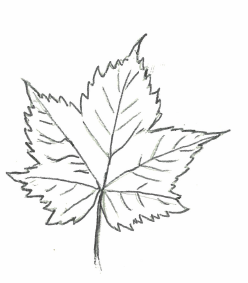
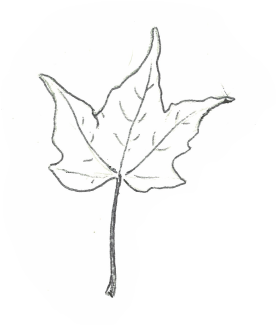
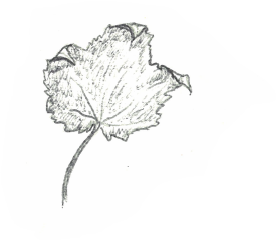
I saw Allen the other day in the Great Hall, kneeling backwards on one of the couches, playing with a maple leaf. No one else was around, and the room was dim, quiet, and cool at mid-day. The leaf looked funny to me, for some reason.

“Hi, Allen. What are you doing?” I greeted him.

“Herding penguins by moonlight,” he answered, with a smile. It’s one of Charlie’s smart-ass lines, but when Charlie says it he does it with a straight face and a bit of a grumble.  When Allen said it, it was like I was in on the joke.

“No, I mean why are you playing with a maple leaf?” I amended.

“Because it’s pretty,” he told me, simply. And it was—the trees are coloring up nicely now. The ridge behind campus looks like a mountain of Fruity Pebbles, and the leaf Allen held was bright orange and very large. “I picked it up on my way into campus this morning.”

“It looks strange.”

“It’s not from campus. I think all ours are redder than this. You’re studying trees with Charlie, right?”

“Yeah.”

Mountain Maple
“You know what it is?” He handed it to me. It was freshly fallen, still flexible, and bigger across than
my hand. It was unquestionably a maple leaf, but the shape was off a bit, unfamiliar. I closed my eyes and let my memory well up. There wasn’t a match on campus. It was no one I knew.

“I know what it isn’t,” I told Allen. “It’s not a sugar maple or a red maple. There are other maples, but I don’t know them.” I spun the leaf stem—the petiole—between my finger and thumb and the big leaf twirled around like a flag. I asked Allen if he knew it. He shook his head.

“Not really my thing. I know it’s a maple….”

“Where is the tree?”

“Across the street from the main entrance and down a bit, maybe one property over. It’s one of the ones Charlie’s crew collects leaf mulch from.”
Ash-leafed Maple


“Allen?” I sat down next to him on the couch.

“Mmm?”

“How do you stay interested in your magic? You know how it works. Doesn’t that take the…well, magic out of the trick?” I’d been thinking about this. I don’t have to choose a magic master until next year, but I’ve been thinking about who I’ll choose and it’s a kind of difficult thing because I’m not sure I really believe in spells and energies and so forth. Allen would be a good choice, because at least I know everything he does in his stage magic is real, but I don’t think I want to learn how his tricks work. I don’t think I want to know. Allen turned and sat properly on the couch, looking, for a moment, like a very small boy climbing around.

“What do you mean, take the magic out of it?” He prompted me.

“I don’t know, the…fun part. The thing that makes it feel magical?” It was circular, and I expected him to call me on it. He didn’t.

“You mean…this?” He suddenly pulled a bouquet of silk flowers out of nowhere. I jumped with surprise and laughed.

“Yes, that.”

“The way you feel when I do that, not the flowers themselves.” The flowers vanished again, but casually, as though he were simply putting them away.

“Right.”

Striped Maple
“Good question. You’re talking about wonder. A lot of stage magicians become very cynical, materialist people. They don’t feel the wonder anymore, because they don’t wonder how it’s done. For me, it’s a vicarious thrill, in part. I get a kick out seeing you wonder. But it’s more than that. I know how to make flowers appear out of nowhere, but I don’t know for sure how you’ll react. And I don’t know—for sure—why. There’s this hunger for wonder in people, this willingness to believe, for just a moment, in things they really don’t believe in. What’s that about? You have to remember, I’m a psychologist. I wonder about people.”

“I don’t think that’s my thing,” I told him.

“No, I don’t think so, either. Hard to say, though. I wouldn’t rule anything out.”

“Allen, how am I going to choose a magic master?”

“I don’t know.”

“I mean, how should I choose?”

“I don’t know that there’s any should about it. What kind of magic do you want to do?”

“That’s the problem. I don’t particularly want to do magic. I don’t care. I don’t know that I believe in magic, even.”  It felt like a very deep admission, confessing my lack of faith in this thing everybody around me seemed to take for granted. Someone crossed the room behind me, I didn’t see who, and Allen and I were both silent while she passed. She didn’t interrupt or even greet us.

“You don’t need to believe in something in order to learn how to do it,” Allen told me, “you learn how to do it, and that way you discover how it works and that it works. Try talking to Kit about it. Why did you come here, if not to do magic?” He didn’t sound surprised or disapproving of my revelation; he just wanted me to clarify myself, as he always does.  I think I remember telling him, months ago, that I’d come here to “learn to do magic like Harry Potter.” Maybe he remembered it, too. He remembers most things.

“I wanted—I want—to belong to a place where people learn to do magic. I want to be inside the magic, I want to belong to that wonder. But I can’t think of anything I’d like to do with a spell that I can’t do better for real.” Did I really put it that way? Wow, that’s telling.

“I suggest you learn whatever type of magic best helps you feel like you belong, then,” Allen suggested.
For a moment I so wanted to ask him to be my magic teacher. I almost said the words. But I was right when I said it earlier; stage magic just isn’t my thing. I handed the leaf back to him and I went on my way. 

I also have to pick a healing master next year—of the six areas, I’ve already got spirit and athletics squared away, and I don’t need art because I have advanced standing there. And I plan to ask Charlie to be my craft master in horticulture and landscape design—I like the work, and I can make good money as a landscaper, later, if I don’t manage to figure out what else I want to do. So that leaves magic and healing. And healing’s a problem, like magic, because I never felt any particular impulse to do it.

Silver Maple
Healing is complicated, too, because most forms of healing require rather more than a bachelor’s degree to do. Part of the issue is that as novices we’re supposed to reach “competence,” not mastery, in these areas, but it is very difficult to be a competent healer without being a master healer. Who wants to go to a merely competent healer? And part of the issue is they take healing very seriously here. They don’t let us just take a couple of classes in herbalism, for example, and call it good; to be a doctor you have to go to med school and to be something like a doctor you have to do something like med school.

It works best for people who come here with some medical training already—I’ve heard there have been novices who were already doctors or herbalists and simply needed help learning bedside manner or something like that. And Allen was part way through his psychology degree when he came here as a student. Otherwise…you can either prepare for some kind of advanced degree program, like how some of Allen’s students graduate with a concentration in psychology and go on to graduate school, or you can learn something that doesn’t require as much study, like you can become a paramedic or a vet tech or a massage therapist, something like that.

I can’t see myself doing any of that.

But Joy teaches this thing called Reiki, and I think maybe I can do that. It’s a kind of laying on of
Sugar Maple
hands, something to do with energy. You get a series of “attunements” and learn certain symbols. Joy will sign off on a novice who gets the first two attunements and logs a hundred hours or more of practice time. I’m not sure I believe in Reiki, either, but unlike Kit’s spell-work group, anybody can go to Joy’s Reiki group and check it out. So I did.

We met on a Saturday afternoon, six of us, plus Joy, in one of the classrooms in Chapel Hall. Joy brought a portable massage table, and I got on it. I was the only one there who wasn’t studying Reiki myself, and they have a rule that visitors always get first chance on the table. I didn’t think I was in any particular need of healing, but they said I could get on the table anyway, if I wanted to. And of course I wanted to, because how else was I to find out what it was all about.

So I lay there, fully clothed, on my back and the others put their hands on me. And I…it’s not that I blacked out, but my focus turned suddenly inward, so that I could feel—almost see—the texture and tension of each part of my body, but I was barely aware of anything else. Sometimes I heard the others whispering to each other, but I could not hear what they were saying, nor did I wish to. The feelings in my body shifted and changed, like some fluid was oozing or soaking through me. I felt relaxed. At one point I heard a woman’s voice—I’m not sure whose—ask “can you feel my hand on your belly?” I said yes, and I could, though the sensation was strange. It was almost like a puddle of warm but nearly weightless liquid rested there. “I’m not touching you,” the voice informed me. And yet I felt it.

Red Maple
After a while, I felt…something like a point of resistance, a tension. It was not an emotional resistance—I felt quite neutral, actually. Instead it seemed almost physical, like something was stuck. I can’t explain it. I heard whispering, people consulting each other. The tension increased and then suddenly subsided. And I started to cry, really, really cry. Tears sliding sideways down my face as I lay there and sliding into my ears. I felt…I can’t explain it. I was just crying.

After a while, the others helped me to sit up and then stand—my body felt strange, very tall and big, somehow. Joy hugged me and held me for a while. “I don’t know why I’m crying,” I told her hair. 

“That’s ok,” she told me.

So.

The next day I went across the street and looked up the tree Allen had found. It’s a Norway maple.
Norway Maple


[Note; the inside corners, or "sinuses" of sugar maple leaves are distinctively rounded, but they look pointed in the picture because the corners normally wrinkle a bit. Also, contrary to popular belief, leaf shape alone is not a reliable way to identify most trees, even maples.]

[Next Post: Monday, October 7th: Fall]

Monday, September 30, 2013

Part 6: Post 4: Story Time


[Note: I was going to talk about reiki, but I’ll do that next post instead. I’ve decided that it makes more sense to stay on the topic of hunting a little while longer.]

So, as I mentioned, I don’t get to see much of Kit these days. Occasionally I’ll go to one of her storytelling workshops, or to “Callaloo,” the open-mike-without-a-microphone she hosts once or twice a month. Sometimes I’ll sit next to her at breakfast so we can chat. Breakfast is the one meal everyone on campus has to attend, but there are a lot of students studying off-campus, either away for a few days or weeks or for the whole semester, so there are a lot of empty seats and it’s easy to find a spot for a semi-private conversation. This morning, though, I sat by myself because I wanted to think and it was Kit who joined me.

“You mind some company?” she asked. I looked up and mumbled something to the effect that I did not mind. She sat, and we both waited as one of the Dining Hall staff announced the moment of silent prayer that began the meal. We only get eggs every third day and it wasn’t my day, but it was Kit’s, so she got up and went to the hot bar. It still gets me that our professors are subject to the same benign rationing as us. When she came back her plate sported a modest pile of scrambled eggs and also two slices of sausage and a fresh-baked role. I didn’t have anything yet because our table hadn’t actually been set for breakfast, so I had to wait until one of the other tables was done with its milk and cereal. I gestured for her to go ahead and eat anyway. She would have waited for me.

“Kit,” I asked, suddenly, “do you eat eggs every day when you’re at home? At your house, I mean.” It wasn’t a very important question, and it wasn’t what I’d sat by myself to think about, but I do wonder, sometimes, how our professors deal with the strange rules and limitations of campus. Kit regarded her eggs critically for a moment. She was halfway through building herself a sandwich.
“I don’t eat eggs off-campus at all,” she said, finally. “Because I don’t know the hens. I’m not going to eat something that came out of a stranger’s vagina.” I snorted with surprised laughter while she finished making her sandwich and took a bite, pleased with herself. Oak called out from a nearby table, asking if I wanted milk and cereal. I took my bowl and went over to serve myself.

“Do chickens even have—vaginas?” I asked, when I came back, stumbling a little over the embarrassing word. 

“I suppose not,” she answered, frowning a little. “They have something back there.  I should ask. Joy or Sarah would know.”

“Does the same principle apply to meat?” I asked, thinking of her sausage. There hadn’t been sausage on the hot bar for some weeks, ever since the meat from the hogs at Litha ran out. She looked at her sandwich and its sausage slices.

“With certain exceptions, yes,” she told me. “This is venison, but at least I know the land it came from. Its Earth-mother, if not its earthly mother.” She smiled at her trick of language. I felt kind of sick.

“Kit, I killed that deer,” I told her. I hadn’t meant to talk with her about what was bothering me, though I’d guessed that she was going to ask, but the topic kind of ambushed me and there I was,
telling her. She put down her sandwich down, suddenly serious.

“And you’re not sure you should have,” she responded, her eyes shining. I nodded. “And you’re not sure it’s ok to feel that way,” she added. I nodded again. Of course, I’d already talked to Charlie about my conflict, we talked over the body of the deer, and I’d been mulling around his words ever since. And the little ritual we went through, and his gift of the knife, had been working at me, too. It’s not like I’ve been worrying about this for two weeks without any kind of guidance. But I wasn’t going to tell Kit that. She knows Charlie is my teacher, but I don’t talk to her about him. I’ve started to think of the two of them as like the rails of a railroad, both necessary, but best kept entirely separate. If Kit suspected I wasn’t telling her something, she didn’t indicate it. 

“If you didn’t feel sympathy,” she told me, “you would not be a good man. And if you never felt conflicted about anything you did, you would not be a wise one.” She took another bite of her sandwich and a slurp of coffee and then, while I ate, she told me a story, beginning with “once upon a time.”

Once upon a time, there was a very proud and skilled hunter, named Actaeon. When other families went hungry, his did not. When other men lost their quarry in the woods, he did not. As time went by, it seemed there was nothing of the woods and fields he did not know, and still he kept on hunting.
Well, one day, Actaeon was hunting on foot with his dogs deep in the woods when he came upon a lovely little pool and in that lovely little pool, he spied the Goddess, bathing. He knew he should not look, that mortals who see the glory of the Sacred Folk are not heard from again, but so great was his desire for Her beauty that he could not turn away. 

When She saw him staring at Her, she dipped Her hand in the waters of the pool and threw the droplets at him, and everywhere the water touched him, he felt himself starting to change. Within seconds his arms and legs and neck were lengthening and hair sprang up all over his body. Where a man had been, a magnificent stag now stood, trembling, by the pool. But Actaeon did not merely look like a stag, he was a stag, and the other animals recognized him as such. And so, Actaeon, once a mighty hunter, became himself prey and he was pulled down and killed by his own hounds.

“Do you think it’s a happy ending?” Kit asked me, when she was done.

“I don’t know,” I said, frowning, confused.

“Well, I’ll give you a hint; in the old stories, cause and effect are sometimes not what they seem. I think you’d better keep on being sympathetic, if you want to become intimate with the forest.”

And at that moment, the Dining Hall staff called for announcements. A few people raised their hands—somebody was driving into the small city about half an hour away and wanted to know if anyone needed a ride there. Someone else had lost a notebook and wanted everyone to keep a look out for it. Messing Around Outdoors was going to meet down by the lake at 1:15, rather than in the classroom at one-o’clock. That sort of thing. Breakfast was over, and without speaking another word, Kit and I got up and went our separate ways, she to teach and I to take care of my janitor's responsibilities.

But "intimacy with the forest"--I'd never put the object of my studies into words like that before.
Neither had Charlie. He'd once said that I was trying to "become friends with God." I hadn't put it into words at all, not exactly, but I'd once told Charlie that I wanted what he had and was willing to go to any lengths to get it, and I'd meant those words. And I'd heard a tenderness, a longing, in the love songs Charlie played, in secret, to the sunset every night.

[Next Post: Friday, October 4th: Reiki]